

The UCI Otology team had seven papers and one panel presentation at this year’s AAO and ANS meetings. The team studied 1271 patients over a six-year period presenting to the neurotology clinic who had tinnitus as part of their symptoms. Patients with migraine experienced more severe tinnitus and were more likely to have a larger symptom burden including more hyperacusis. The study further supports previous work that migraine is very strongly associated with the severity of tinnitus and its treatment can help reduce the loudness of tinnitus.
Patulous Eustachian tube (PET) is associated with migraine and headache. Many patients with PET present in the absence of weight loss, surgical procedures around the Eustachian tube/nasopharynx, or radiation therapy. These patients have been described in the literature as having more “anxiety” issues. A new study from Dr. Djalilian and colleagues studied a group of 5992 patients with PET and evaluated a new diagnosis of migraine in the first five years and beyond after their PET diagnosis. Patients diagnosed with PET were 2.2 times more likely to be diagnosed with migraine in the subsequent 5 years and beyond compared to the matched general population. Migraine without aura was 2.5 times more likely to be diagnosed in the first 5 years after the PET diagnosis. Migraine can cause a sustained neural output to the tensor veli palatini and cause sustained opening of the ET leading to PET. These patients often describe a variable nature to their symptoms, where some days are better than others.
Using the TriNetX database, the team studied 805,430 patients with central sensitization disorder (CSD) and compared it to an equal number of control patients. The study found that patients with central sensitization disorder (CSD) also known as atypical migraine have a 3.15X risk of developing hearing loss in the first 10 years after diagnosis.
Patients with hearing loss in a national database were stratified by hearing rehabilitation (36,350 receiving hearing aid/cochlear implant) and compared to equivalent non-rehabilitated patients. The study found that patients with hearing loss who received a hearing aid or cochlear implant were 26% less likely to have a diagnosis of dementia in the first five years after the diagnosis of hearing loss.
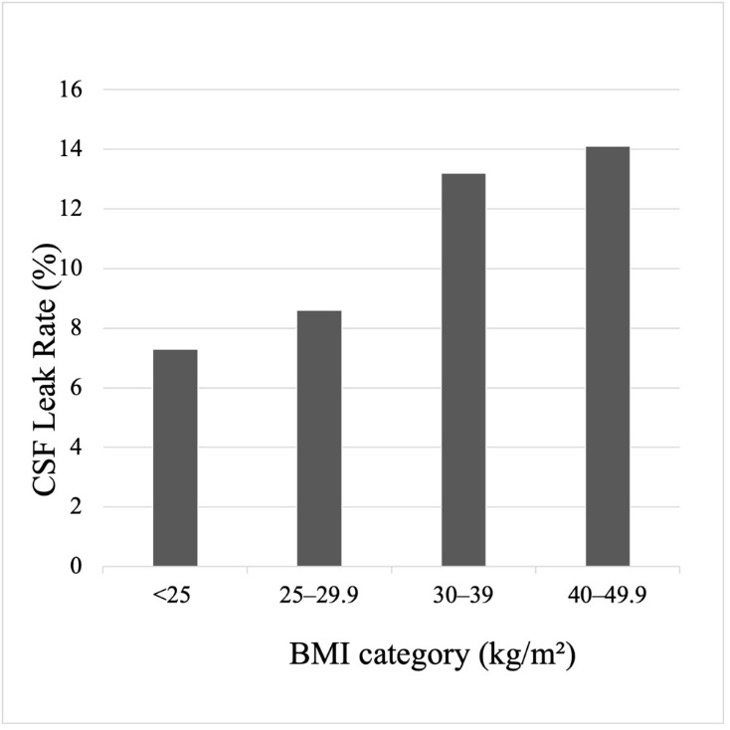
The team studied a group of 5,005 patients who underwent vestibular schwannoma resection in a national database. Of those, 9.2% developed a CSF leak in the first 30 days after surgery. The study team found that CSF leak rate increased substantially with increasing BMI. Patients with a BMI of over 40 were two times more likely to develop CSF leak after vestibular schwannoma resection compared to those with a normal BMI.